What to Check Before Buying Agricultural Insect Netting
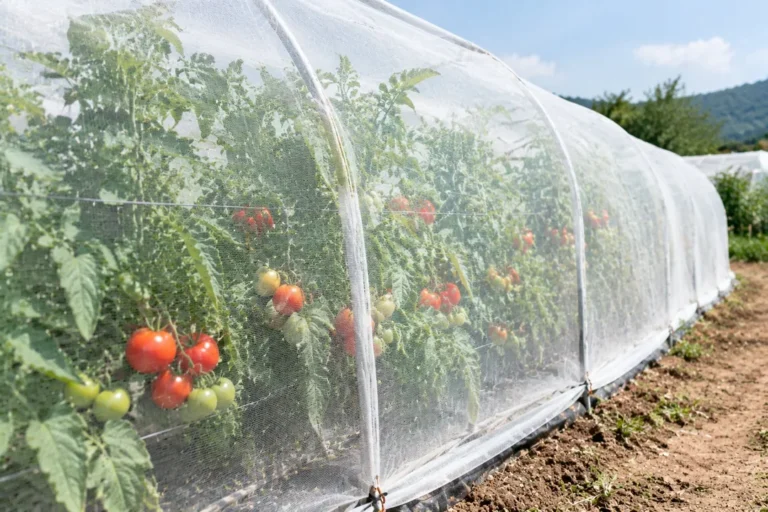
Before buying agricultural insect netting, start with the pest you need to exclude and the opening where the net will be installed. Then compare the net’s actual aperture size, porosity and airflow data—not just its mesh count. Confirm that the material suits your climate and expected service life, and make sure the roll dimensions and installation plan fit your structure.
A net that is too open may let the target pest through. A very fine net may restrict ventilation. The best specification balances pest exclusion with the crop’s growing conditions.
What should you check first?
Start with two questions: which pest are you excluding, and where does it enter? If thrips are your main concern, see our dedicated guide on choosing mesh size for thrips control — the same principles of aperture and airflow apply here.
Agricultural insect netting buying checklist
1. Identify the target pest. Different insects have different body sizes and behavior. Decide whether you are targeting whiteflies, aphids, thrips, leafminers, beetles or another pest. If you are unsure, identify the pest with a local agricultural adviser or extension service before selecting a screen.
Consider how the pest reaches the crop: through greenhouse vents, sidewalls, doors, row covers or directly on incoming seedlings. A screen can reduce entry through a covered opening, but it cannot remove pests already inside or carried in on infested plants.
2. Ask for the actual aperture size. Mesh count alone is not enough to compare products. Two nets sold under the same mesh label may have different openings because thread thickness and weave construction vary. Ask the supplier for the clear aperture dimensions, ideally in millimeters or microns, and request a technical drawing or sample if available.
Match the opening to the target pest and the conditions of use. Very small insects may still pass through some screens depending on body shape and opening geometry, so avoid treating a mesh label as a guaranteed exclusion rating.
3. Balance exclusion with airflow. Finer screens can reduce airflow through greenhouse vents. This may affect temperature, humidity and crop conditions, especially in warm climates or structures that rely on natural ventilation. Ask for porosity or airflow-resistance information, and consider the screened area and ventilation capacity of the structure.
If a fine net is necessary, consult the greenhouse designer or ventilation supplier about whether the intake or vent area needs to increase. Follow the screen manufacturer’s installation recommendations.
4. Check the material and UV protection. Agricultural netting is exposed to sunlight, wind, rain and repeated handling. Ask what polymer it is made from and whether it is UV stabilized for outdoor use. Request the expected service life and written warranty terms, including what conditions are covered.
For example, CROPBASTION lists UV-stabilized HDPE insect netting, a five-year warranty and custom widths on its website. Confirm that the specific product and warranty terms offered for your order match your location and application.
5. Confirm strength and construction. Check the net’s weight or GSM, thread construction, edge finish and reinforcement. These details affect handling and suitability for the installation, but weight alone does not establish pest exclusion or durability. Ask whether the product is designed for greenhouse vents, sidewalls, tunnels, row covers or another use.
If the net will be installed under tension or exposed to wind, confirm the recommended support spacing and fastening method. Do not assume that a lightweight crop cover and a fixed greenhouse screen have the same installation requirements.
6. Measure the installation area. Before requesting a quote, measure each opening or crop area and record:
- Opening width and height
- Number of openings and total area
- Required roll width and length
- Overlap needed at seams and edges
- Space for fastening, tensioning and future repairs
Custom widths can reduce seams and make installation easier. Confirm whether dimensions refer to the finished usable width and whether cutting or edge finishing is available.
7. Plan for installation and maintenance. A good screen can underperform if gaps are left around frames, doors or adjoining panels. Plan how edges will be sealed, how doors will be screened, and how tears will be repaired. Include access for inspection and cleaning, since dust and debris can clog openings and reduce airflow.
Inspect screens regularly for loose fasteners, damage, stretched areas and accumulated dust. Replace or repair damaged sections promptly.
8. Compare complete supplier specifications. When comparing quotes, request the same information from each supplier:
- Mesh count and clear aperture dimensions
- Material, thread diameter and net weight
- Porosity or airflow data
- UV stabilization and warranty
- Roll width, roll length and customization options
- Color, packaging, lead time and shipping terms
- Installation guidance and sample availability
Comparing only the price per roll or mesh count can hide important differences in construction, performance and usable dimensions.
Quick pre-order checklist
Before placing an order, make sure you can answer “yes” to these questions:
- Have I identified the pest and the opening where it enters?
- Do I know the net’s actual aperture, not just its mesh count?
- Have I considered ventilation and crop climate?
- Is the material suitable for outdoor UV exposure?
- Do the dimensions include enough material for overlaps and fastening?
- Do I understand the installation, warranty and delivery terms?
- Have I requested a sample or technical data where needed?
Choose netting for the crop and the site
There is no single insect net that suits every crop, pest and growing structure. Specify the protection you need, compare measured openings and airflow information, then check material, dimensions and support before ordering.
CROPBASTION lists 40, 60, 80 and 100 mesh UV-stabilized HDPE insect netting for crops, greenhouses and orchards, with custom widths. Contact the team with your target pest, crop, installation dimensions and climate so you can discuss the appropriate specification — request a free quote.