Why Your Tomatoes Need Insect Netting
Protect Tomato Plants from Common Insect Pests
Tomatoes can be affected by several insect pests throughout the growing season. Common examples include:
- Whiteflies: These insects feed on plant sap, and some species can transmit plant viruses.
- Aphids: Aphids feed on plant sap and may also spread certain plant viruses.
- Thrips: These small insects can damage leaves, flowers, and developing fruit. Some species transmit plant viruses.
- Leafminers: Their larvae tunnel inside leaves, leaving visible trails and damaging leaf tissue.
- Caterpillars and other larger insects: Depending on the species, they may feed on leaves, stems, or fruit.
The level of protection depends on the insect species and the mesh opening. A net that blocks larger insects may not stop smaller pests, so choosing a suitable specification is important. As a rough guide: fruit flies, moths and caterpillars are kept out by 40 mesh, while whiteflies and aphids call for a tighter 60 mesh weave.
Reduce Pest Entry into Greenhouses
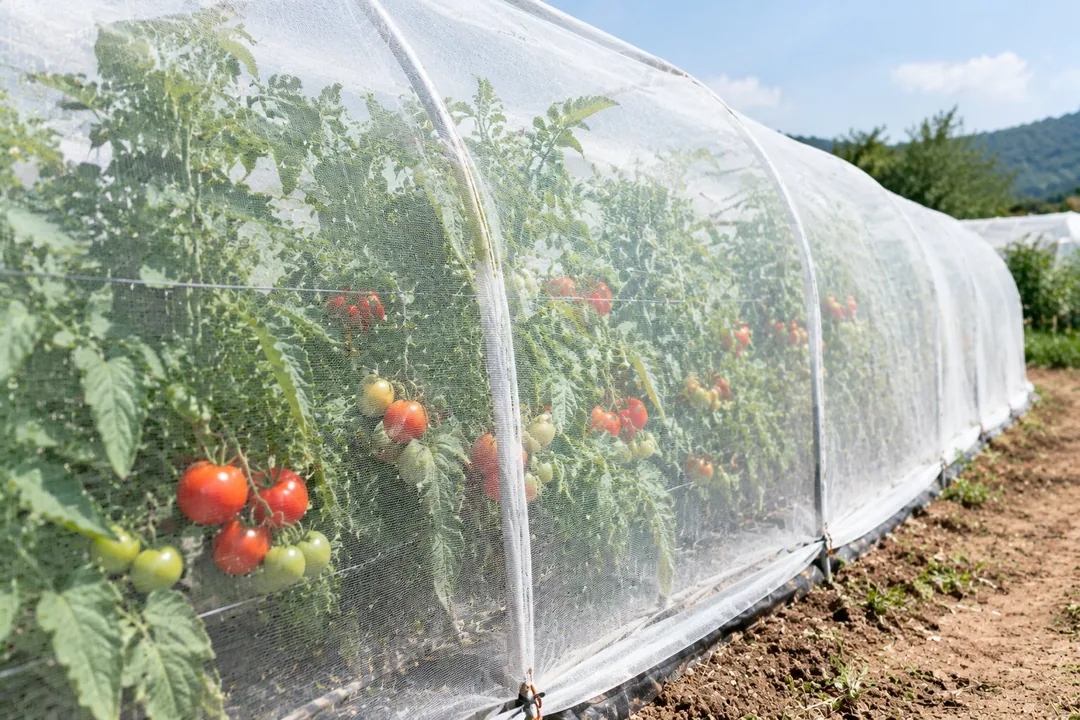
Insect netting can be installed over greenhouse openings, ventilation areas, or suitable crop structures to help reduce insect entry.
When we help buyers evaluate insect netting options, we encourage them to consider both the mesh size and the growing environment. The net should be suitable for the target pests while allowing enough airflow for the crop.
Proper installation is equally important. Gaps around doors, edges, and other openings may allow insects to enter even when the net itself has a suitable mesh size — which is why many growers pair a fine mesh over the vents with a double-door entry.
Insect netting works best as part of an integrated pest management plan, alongside regular crop inspection, good sanitation, and other appropriate control measures.
Choose the Right Mesh Size for Tomato Growing
Not all insect nets provide the same level of protection. Finer mesh can help exclude smaller insects, but it may also restrict airflow more than a coarser mesh.
Before choosing a net, consider:
- Which insect pests are causing problems?
- Will the net be used in a greenhouse or an open-field structure?
- How important are ventilation and temperature control?
- What mesh opening and net dimensions are required?
We recommend checking the actual mesh opening and product specifications rather than relying on mesh count alone. If very small pests are a concern, growers should confirm that the selected net is appropriate for those pests and test it under their growing conditions where possible.
Our Standard Range at a Glance
| Product | Mesh opening | Weight | Width |
|---|---|---|---|
| 40 Mesh HDPE Insect Netting | 1.4 mm | 20 GSM | 1–3 m |
| 60 Mesh Standard Insect Netting | 1.3 mm | 20 GSM | 1–3 m |
| 60 Mesh Heavy-Duty Insect Netting | 1.2 mm | 40 GSM | 1–3 m |
| 80 Mesh HDPE Insect Netting | 0.7 mm | 25 GSM | 1–3 m |
| 100 Mesh HDPE Insect Netting | 0.4 mm | 37 GSM | 1–3 m |
For a full comparison — including which mesh matches which pest — see the complete insect netting product range
Choose Insect Netting That Fits Your Needs
The right insect netting can help reduce pest pressure and support a more controlled growing environment for tomatoes. However, no single mesh size is suitable for every pest or growing condition.
At CROPBASTION, we weave agricultural insect netting in our own factory in different specifications for different applications. We encourage buyers to identify their target pests, growing conditions, and required dimensions before selecting a product — and we are happy to advise based on what other tomato growers use in similar climates.
2 Comments